
VLiva Devlog #1 — Why I Started Building a Linux VTuber App
The first VLiva devlog explaining why TamKungZ_ started building a native Linux VTuber app instead of relying on Windows tools or compatibility layers.
VLiva Devlog #1 — Why I Started Building a Linux VTuber App
I didn’t originally plan to build this.
VLiva started as a small side experiment — something I made mostly out of frustration. I work with Live2D occasionally, and my main OS is Linux. Switching between Linux and Windows just to run VTuber software quickly became annoying.
So I looked for alternatives.
There are ways to run existing tools on Linux, but most of them involve:
- compatibility layers
- workarounds
- unstable setups
- or noticeable performance loss
None of them felt clean.
At some point I stopped searching and thought: “What if I just build something myself?”
The Early Stage
At the beginning, I didn’t take this project seriously at all. It was more like: “let’s see if this is even possible.”
The main challenge was obvious:
- C++
- OpenGL
- real-time rendering
- Live2D runtime behavior
This wasn’t something I could just throw together in a weekend.
Progress was slow. I spent around 5 months on the project — although realistically, I paused for more than half of that time.
Coming Back
Recently, I came back to the project with a different mindset.
Instead of experimenting, I wanted to actually make it work.
Surprisingly, things started to click:
- rendering pipeline became stable
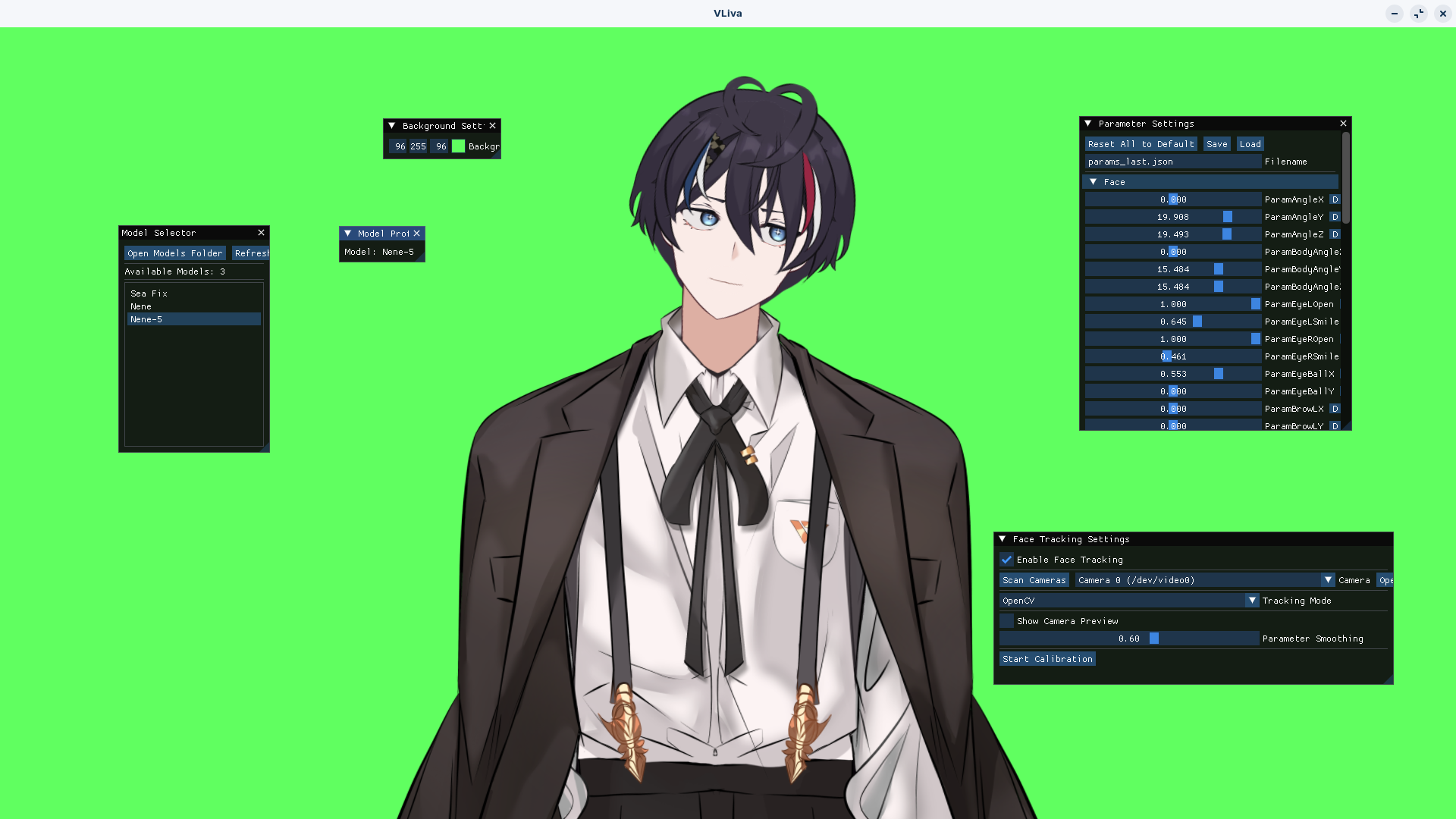
- model loading worked
- basic interaction started functioning
And at some point, I realized:
“This is actually usable.”
Not perfect. Not polished. But real.
What VLiva Is (for now)
VLiva is a native Linux VTuber app prototype that focuses on simplicity:
- No Wine
- No virtual machines
- No external dependencies (as much as possible)
- Just install and run
That’s the core idea.
What’s Next
Right now, the project is still far from finished.
Things that still need work:
- UI/UX
- performance optimization
- input / tracking improvements
- overall stability
I’m planning to release a demo version around April to gather feedback and bug reports.
If the project reaches a stable and complete state, I may release it on Steam in the future. Pricing is undecided, but the demo will remain free.
Why I’m Sharing This
Originally, this was just a personal tool.
But now I’m curious:
Is there actually a demand for VTubing on Linux? Are there other people dealing with the same problems?
If yes, then this project might be worth pushing further.
If not… well, at least I built something interesting.
Either way, I’ll keep going for now.
FAQ (from Reddit feedback)
Is this similar to Inochi2D?
Some people suggested Inochi2D, and yes — I’ve looked into it before. Their source code is clean and their optimization approach is great.
But my main target for VLiva is Live2D support, so Inochi2D can only help as a partial reference, not a direct solution.
Does VTube Studio already work on Linux?
For some users, yes. One Linux user reported that VTube Studio + VBridger was basically plug-and-play.
That said, Linux experiences can still vary by distro and setup (Proton, drivers, etc.).
Then why build VLiva?
The goal is not to replace VTube Studio.
VLiva is being built as a fully native Linux alternative — no compatibility layer in between, and a simpler path for people who prefer native workflows.
Will VLiva support VBridger compatibility?
I’m currently exploring that idea. It’s not confirmed yet, but compatibility with existing VBridger workflows could make adoption much easier for Linux VTubers.